Drivers of Manoomin Proliferation Project
Written by Macy Gustafson
macygust@umich.edu
Hello and welcome!
I am a Master’s student at the University of Michigan studying Manoomin for my thesis project. This page details my project, my motives, and my progress! If you have any questions, comments, or advice please feel free to reach out to macygust@umich.edu.
Background
In the Great Lakes region, there are two species of Manoomin: Zizania palustris, which has a historical northern range , and Zizania aquatica, which has a historical southern range and smaller seeds (both ranges pictured to the right). Researchers Drewes & Silbernagel noticed an especially apparent trend of reduced abundance in the southern extents of Z. palustris. Some studies hypothesize temperature and weather fluctuations are driving a change in Z. palustris habitat, but there has not been extensive research into how these changes would be propagating through other environmental variables (such as changes in water levels and surface water temperatures) into impacts on Manoomin (Drewes & Silbernagel, 2012; Pillsbury & McGuire, 2009).
Despite having different ranges and characteristics, recent model studies group the two species under one umbrella. The most comprehensive collection of Manoomin survey data in Michigan (Manoomin: The Story of Wild Rice in Michigan by Barton) and the most recent and extensive habitat suitability model of Manoomin in Michigan do not differentiate between the two species.
Specific parameters that influence the growth and distribution of the species have been defined using different methodologies, which leads to different conclusions regarding plasticity and dominance of each species. There are limited studies which examine the growth of both species under the same experimental conditions.
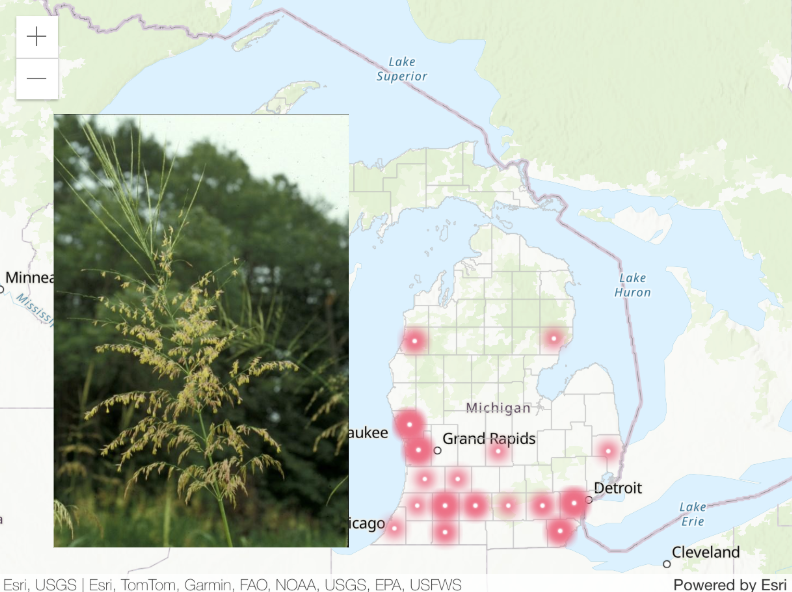
Zizania aquatica range and photo from Michigan Flora
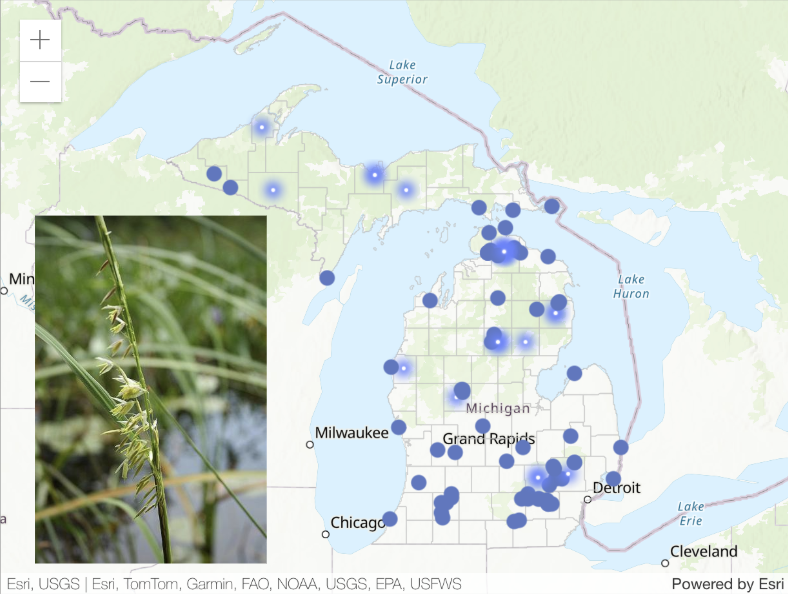
Zizania palustris range and photo from Michigan Flora
Baseline Growth Component
Grow the two species under the same conditions in the same environment. This will allow us to collect data on how the two species perform under similar conditions. Partners involved in this component are Michigan Natural Features Inventory, Michigan Sea Grant, and the Cooperative Institute for Great Lakes Research.
Project Objectives
Organic Matter Component
Grow the two species in varying depths of organic matter to help answer the question, ““If we show up to a restoration site with XX depth of sediment, what do we plant?” This component was co-created with tribal partners.
Historical Range and Climate Component
Explore if there are any changes in climate and hydrology throughout the historical ranges of the two species. We aim to compile data to better understand if climate change could be driving the reduced abundance of specifically Z. palustris. Partners involved in this component are the Global Center for Transboundary Water and the Cooperative Institute for Great Lakes Research.
Mesocosm Methods
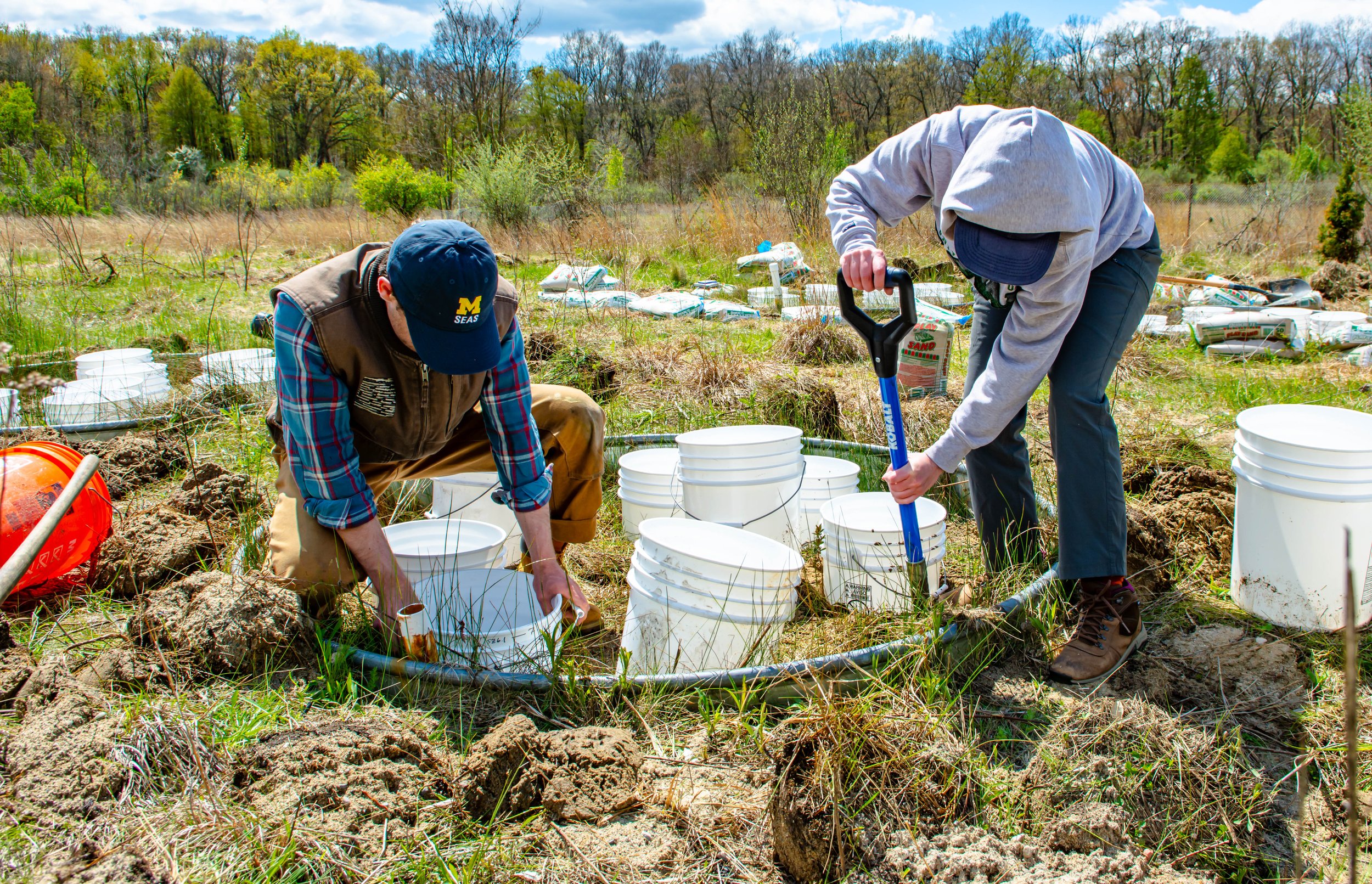
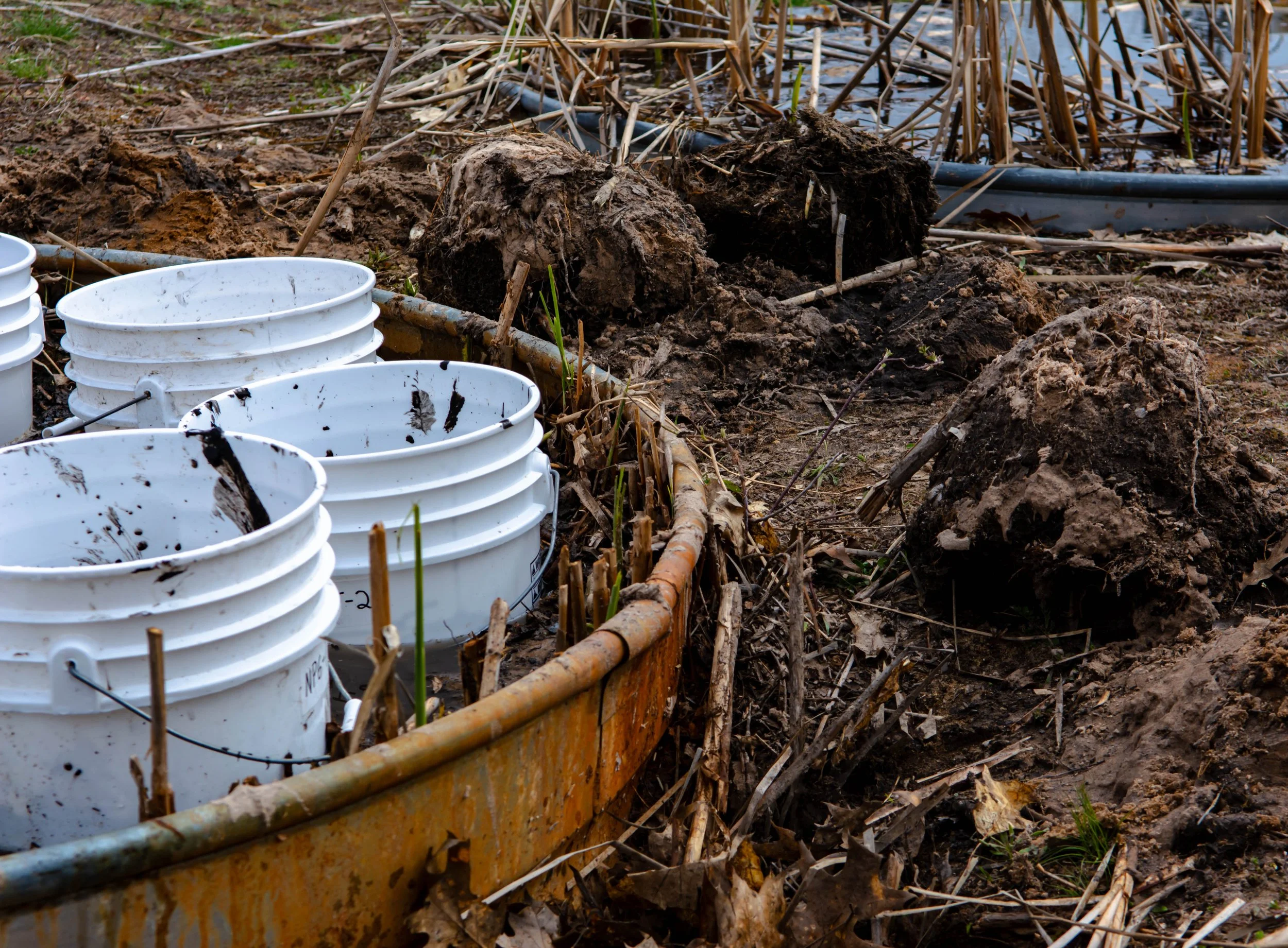
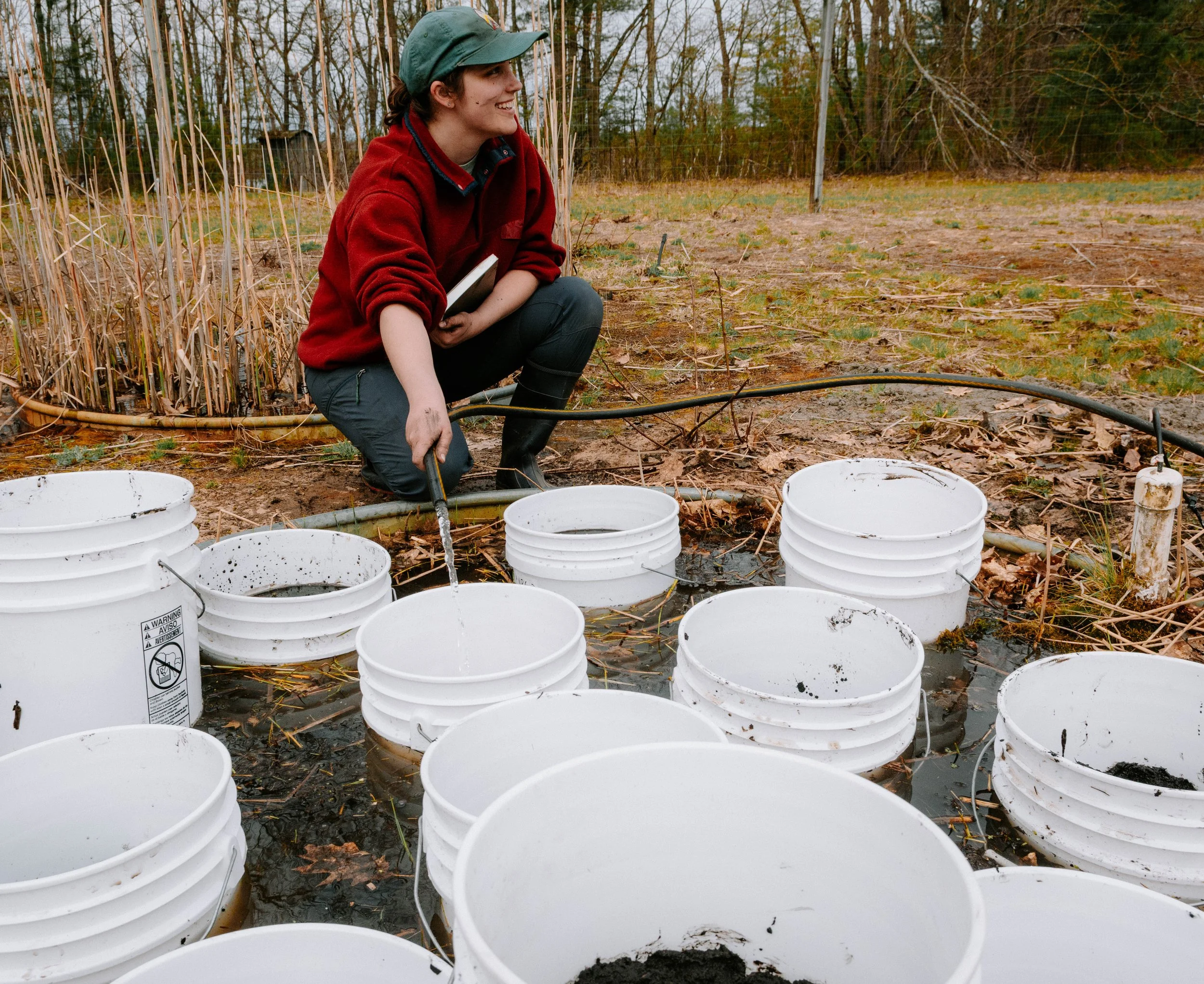
I propose to investigate these factors through a multi-phased project focused on analysis of Manoomin growth under variable soil and environmental site conditions. To begin, I will conduct two mesocosm experiments in parallel running from April to September 2026; one at the University of Michigan Biological Station (UMBS) and another at the University of Michigan E.S. George Reserve (ESGR). At these sites I will seed the two species of Manoomin in buckets that will act as individual replicates. The buckets will contain a gradient of organic matter and sand ratios. I will monitor the growth of the Manoomin throughout the summer and collect data on height, width, and other growth parameters.
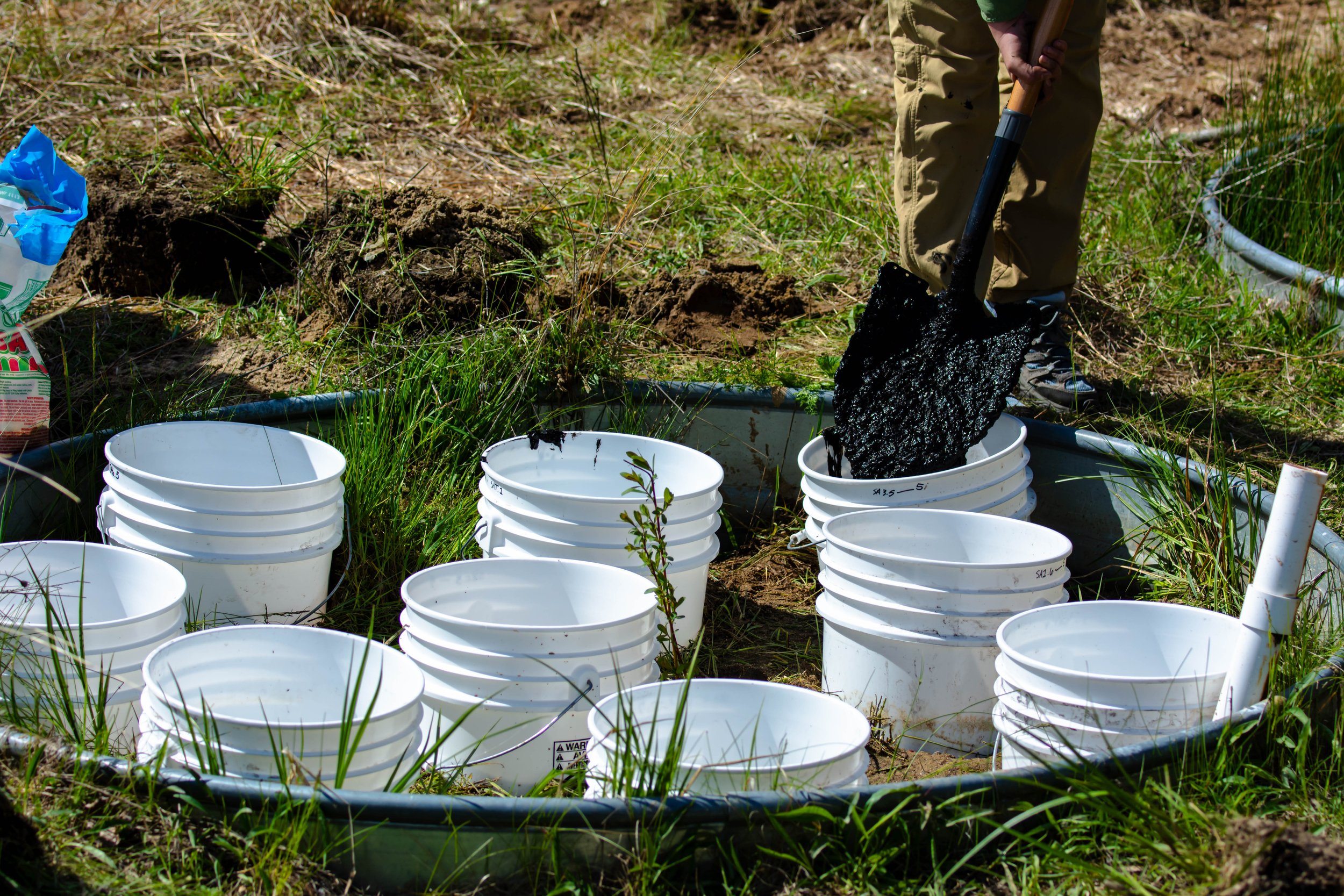
Filling the buckets with the organic matter ratio. Photo credit: Sam Schurkamp
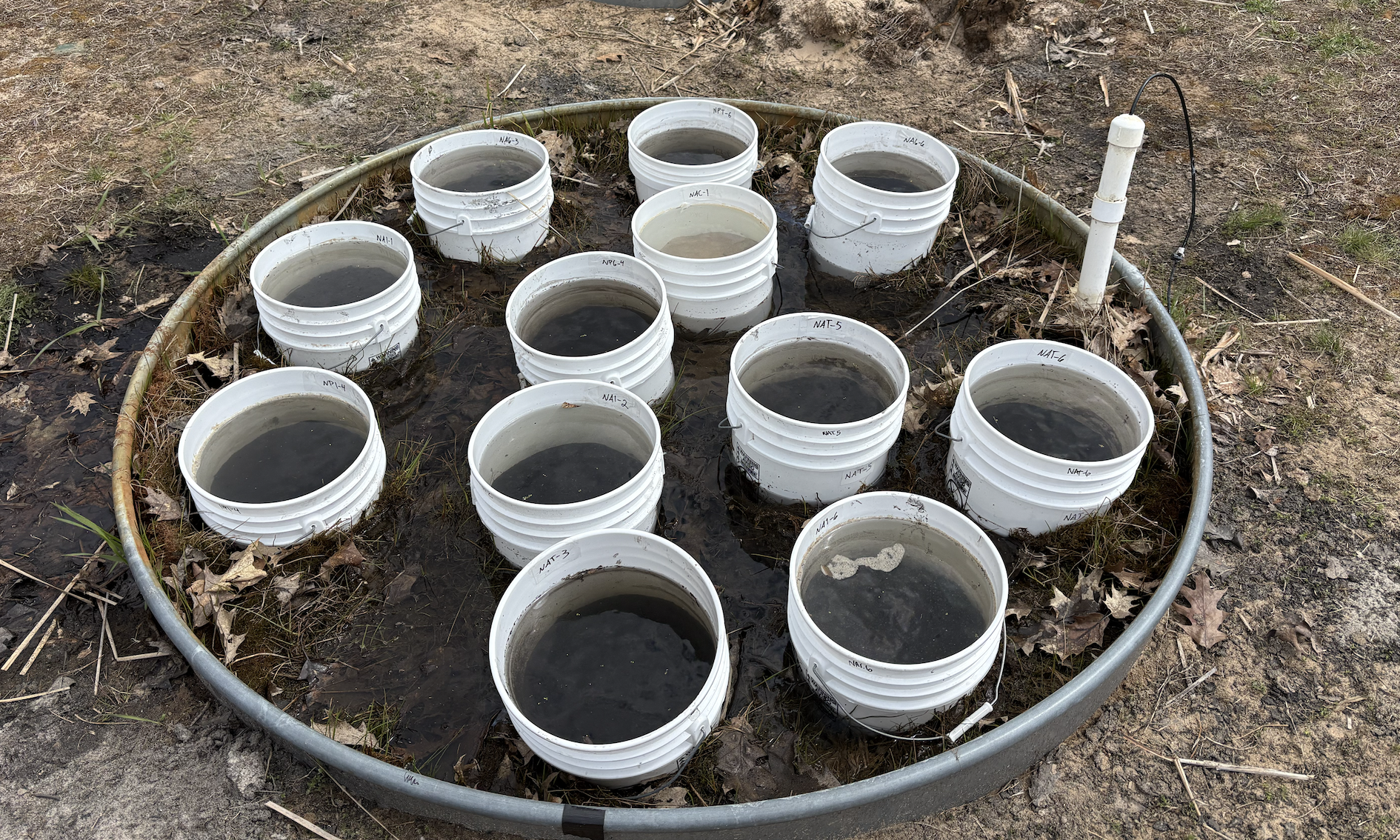
Finished block with 12 buckets surrounded with water and filled with water.
Modeling Methods
My project will also include assembling 30 years of historical climate and weather from the National Oceanic and Atmospheric Administration (NOAA) hydrometeorological stations closest to each site, along with data from ERA5 (European Centre for Medium-Range Weather Forecasts Reanalysis v5). The historical record for these variables will serve as a basis for assessing the extent of changes (including both trends and abrupt shifts) in hydrology over time and projecting these trends into the future. I will also work with CIGLR’s Dr. Hutson to evaluate historical regional climate data from the Great Lakes Regional Climate model, which uses the Weather Research and Forecasting model (GL-WRF), in comparison to the NOAA and ERA5 data I collect. After pooling all the data, we will then compare my model’s initial historical and future projections against projections from GL-WRF. Using information from both historical models and the ERA5 station trends, we will develop a model that includes the vegetation data I collect over the summer.
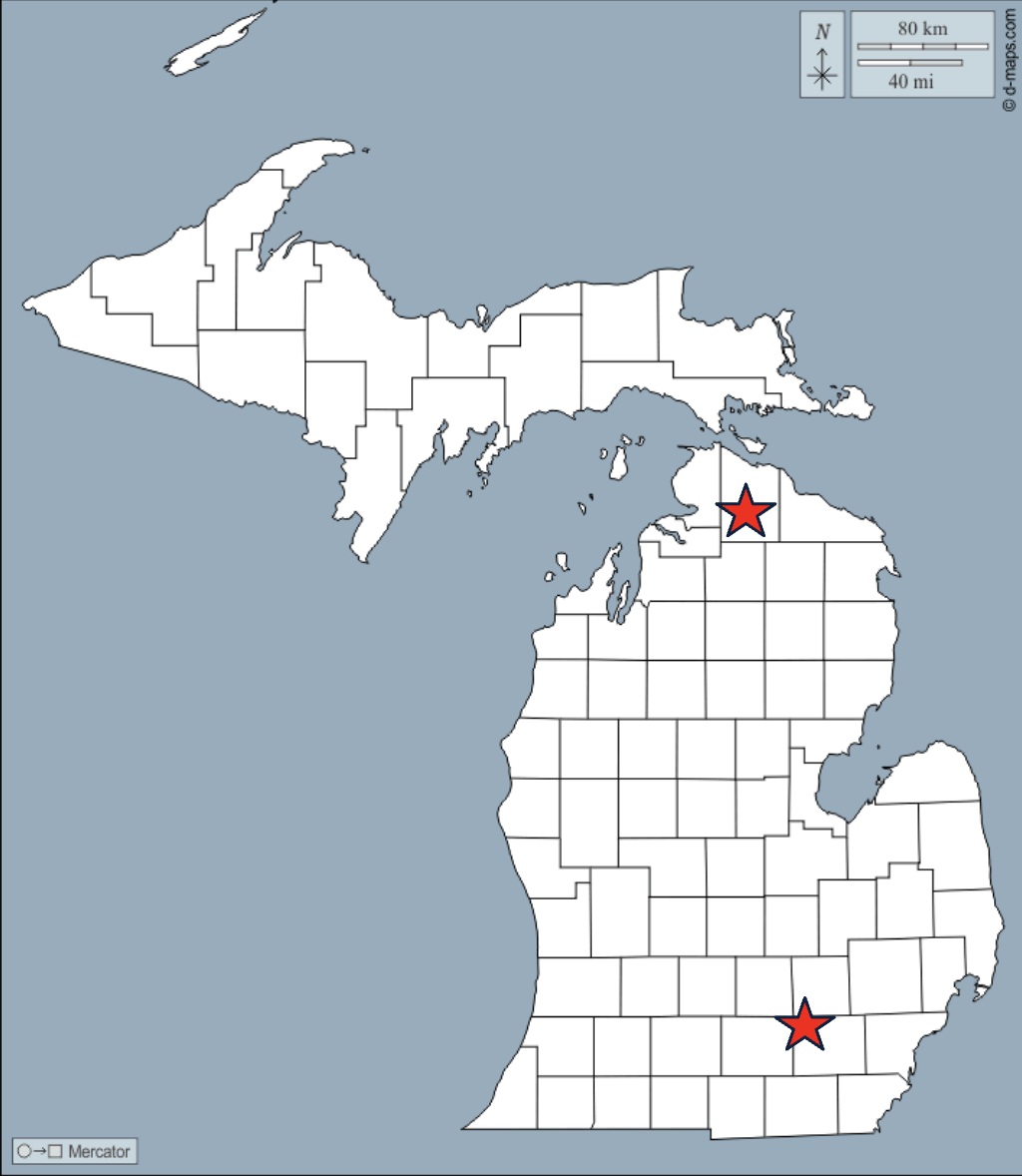
Map of Michigan with red stars on the mesocosm sites. The southern red star is at ESGR and the northern red star is at UMBS.
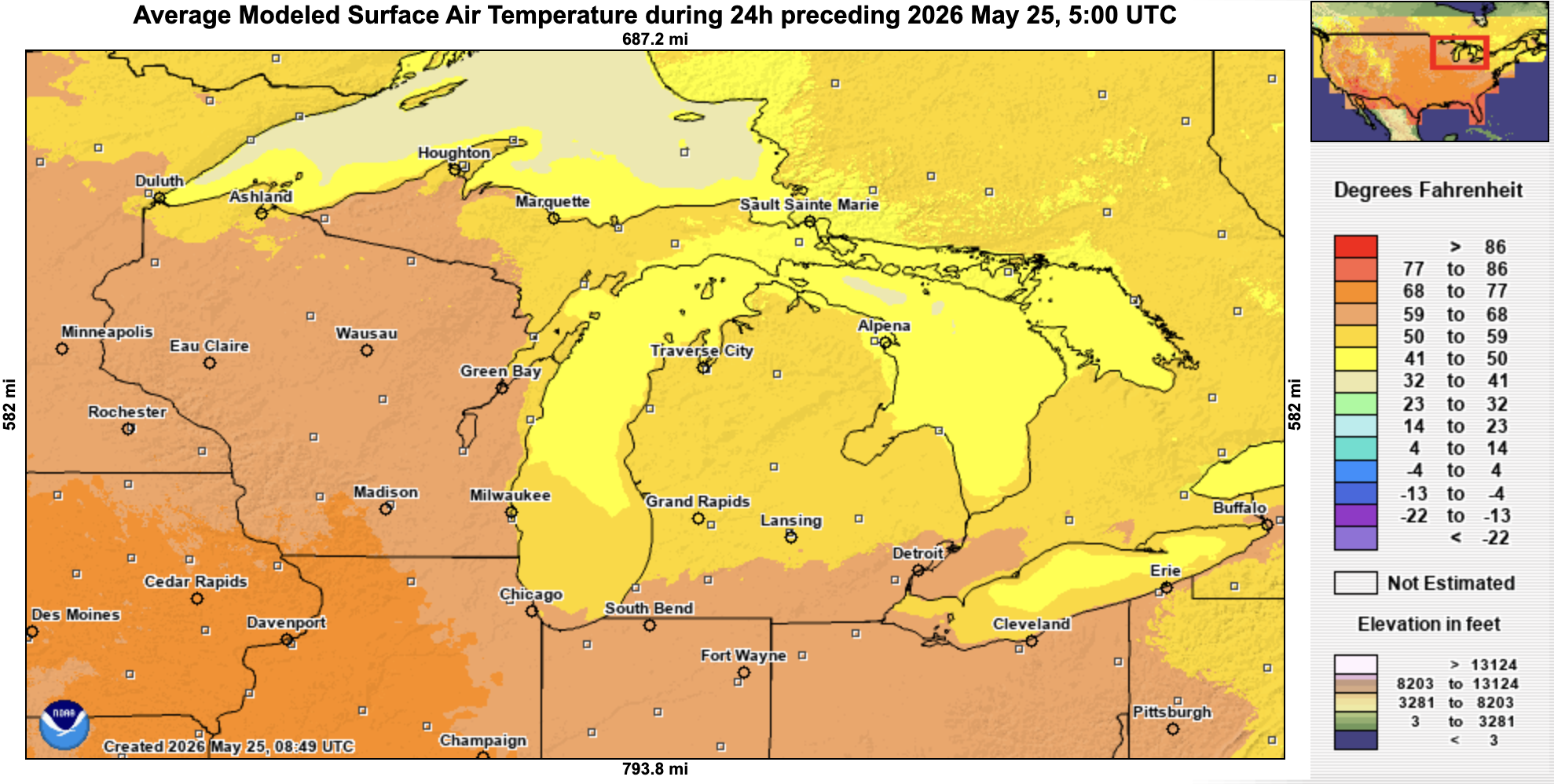
Screenshot of NOAA’s National Operational Hydrologic Remote Sensing Center of the average air temperature of a day in May.
End Goals
1. Delivery of high quality information on future ranges, population estimates, and condition of Manoomin to CIGLR, GCTW, and Indigenous partners.
2. Increase in environmental literacy by presenting my research at and participating in formal and non-formal learning events to communicate the value of western and Indigenous knowledge systems.
3. Engagement with other organizations and stakeholders throughout the Great Lakes, such as Great Lakes Indian Fish and Wildlife and Michigan Natural Feature Inventory, to update their members on actionable management predictions and expand research application.
If you are interested in learning more or reaching out regarding my project, please contact me at macygust@umich.edu! Thank you for reading!
Updates!
-
![]()
-
![]()
Videos exploring the UMBS set up!
My lab project manager took some videos of me walking around and explaining the project set up. Check out this page if you want to see more!
-
![]()
News article published containing my research
Thank You to my Project Partners!